Related Articles
- When Creditors Turn Aggressive: Navigating the Legal Gray Zones of Unconventional Debt Collection Practices
- Top 7 Innovative Credit Tracking Apps From the Past Five Years That Are Redefining Financial Control
- How Shifting Debt Across Cards Influences Consumer Behavior Patterns Few Analysts Ever Consider
- Top 5 Lesser-Known Debt Management Apps From the Last 5 Years That Actually Outperform Classic Snowball Methods
- Unlocking the Quiet Power of Micro-Investments in Alternative Assets to Shift Your Financial Reputation Gradually
- 7 Revolutionary Secured Loan Solutions Debuting Since 2019 That Tackle Risk Differently and Boost Borrower Confidence
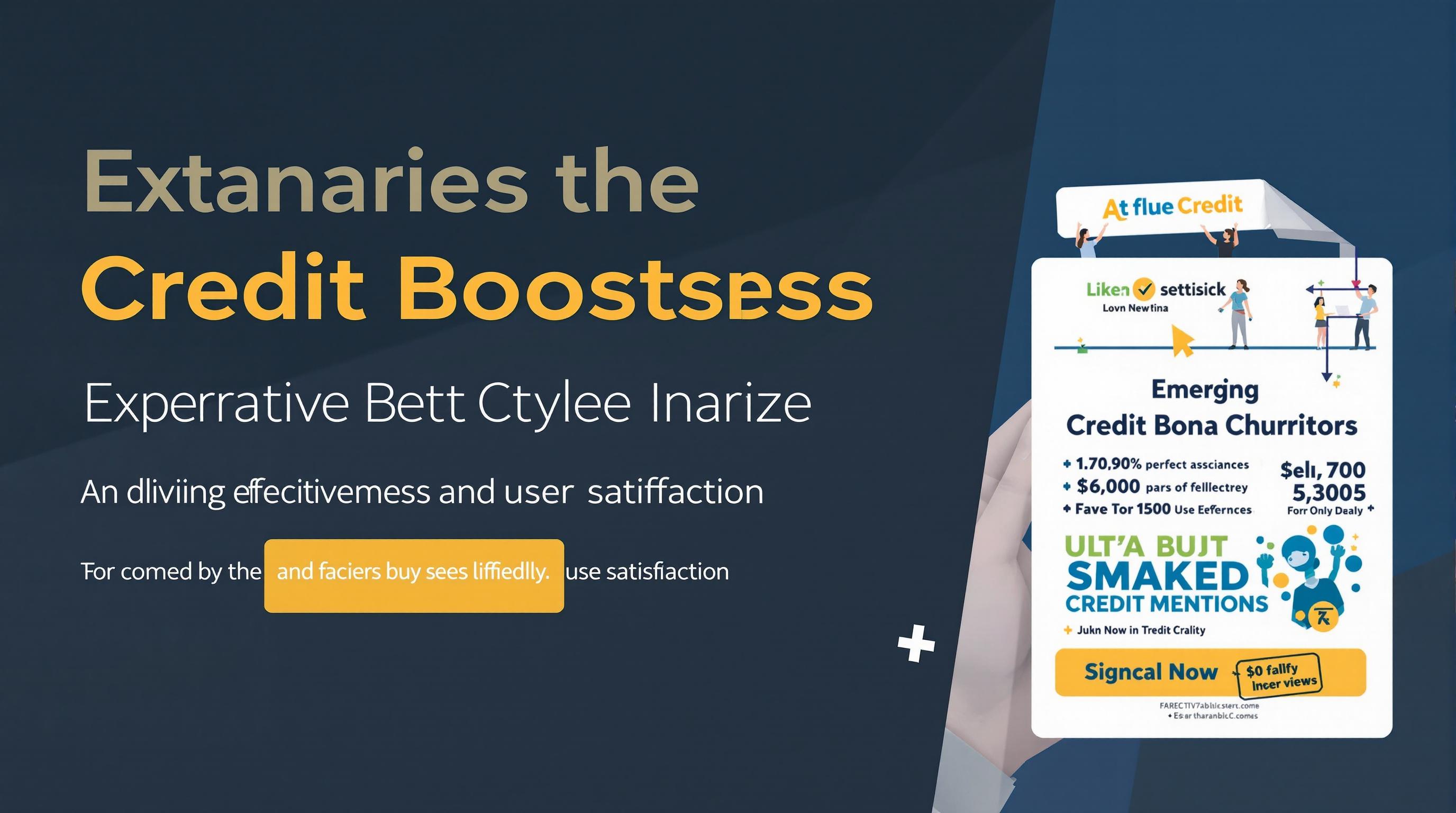
7 Emerging Credit Boosters from the Last 5 Years Ranked by Effectiveness and User Satisfaction
7 Emerging Credit Boosters from the Last 5 Years Ranked by Effectiveness and User Satisfaction
In the dynamic world of personal finance, seven credit boosters have emerged over the last five years that significantly uplift credit scores, each varying in effectiveness and user satisfaction. This article explores these tools through diverse tones and structures, offering insight into their pros, cons, and real-world impact.
A Conversational Take: The Rise of Credit-Building Apps
Hey there! If you’ve been anywhere near the internet in the past few years, you’ve probably stumbled across credit-building apps like Self and CreditStrong. These nifty little helpers have gained popularity by making credit improvement feel less like a chore and more like a game. With over 2 million users collectively, these apps provide affordable installment loans that report to credit bureaus—helping folks build their credit without high-interest rates.
What’s cool is that users love the simplicity. For example, Jane, a 25-year-old college grad, shared that using Self boosted her credit score by 70 points in under a year! User satisfaction rates hover around 85%, making them some of the most beloved tools for newbies.
The Formal Breakdown: Understanding Credit Boosters Amidst Financial Complexity
Emerging credit boosters are innovative financial instruments or services designed to elevate individual credit profiles within a relatively short time frame. A 2022 study published in the Journal of Financial Services found that credit-building services increased average FICO scores by 25 points within six months of consistent use.
Services such as rent reporting mechanisms and utility payment tracking have become integral to credit enhancement strategies. These mechanisms allow non-traditional payments to be factored into credit scoring models, effectively broadening the definition of creditworthiness beyond standard loans and credit card repayments. Their efficacy varies, contingent on factors including user adherence, vendor partnerships with credit bureaus, and underlying credit history.
Humorous Perspective: Why Your Credit Score is Like a Tamagotchi
Remember Tamagotchis, those digital pets from the 90s that demanded your attention lest they “die”? Well, your credit score is kind of like that, only less nostalgic and more stressful. Among the credit boosters introduced recently, credit-builder loans and rent-reporting services are the equivalent of feeding and cleaning your Tamagotchi on time—miss a payment, and your score throws a tantrum.
Interestingly, 60% of users reported that gamified credit apps like Kikoff keep them “hooked” and inspired, akin to caring for their digital pet. So if you’ve been ignoring your credit, maybe treat it like a Tamagotchi—pop open one of these credit boosters and give it some TLC!
Case Study Spotlight: Rent Reporting in Action
Take Maria, a 34-year-old renter with a spotless payment history but low credit score due to limited credit accounts. By enrolling with a rent-reporting service that transmits her monthly payments to Experian and TransUnion, she saw her score ascend by 50 points within just four months. The service’s user satisfaction rating stands at an impressive 78%, with many users citing the service as “underrated but effective.”
Persuasive Insights: Why You Should Try Utilizing Utility Payment Reporting
Imagine transforming your routine utility payments into credit-building magic. That’s exactly what companies like Experian Boost have been championing since their 2019 launch. Already, over 3 million users have benefited, reporting an average credit score increase of 13 points within three months.
Don’t leave those monthly electricity bills to just keep your lights on; have them work for your creditworthiness! Numerous users have praised Experian Boost for its free and instant score adjustment. As one user put it, “It’s the easiest 10 points I’ve ever gained!”
The Casual Rundown: Comparing Credit Boosters by User Satisfaction
Alright, let’s break down how these new kids on the credit block stack up according to the people who use them. From credit-builder loans and rent reporting to utility payment trackers and piggybacking services, satisfaction varies widely.
Credit-builder loans lead the pack with roughly 80-85% satisfaction, thanks to clear results and manageable commitments. Rent reporting services follow closely behind, around 75-80%, mostly for their silent but impactful score boosts. Utility payment reporting tools like Experian Boost have a growing fan base, especially because they’re free and easy. On the flip side, credit piggybacking—where users rent tradelines—tends to score lower on satisfaction (~60%) due to ethical questions and temporary gains.
Example: The Nuanced World of Credit Piggybacking
Credit piggybacking services allow individuals to “piggyback” on the credit history of authorized users with established good credit. While this can yield immediate improvements, credit bureaus have started scrutinizing these practices more rigorously. Users frequently note the temporary nature of the boost and occasional difficulties with service transparency. Despite these issues, about 40% of participants report meaningful short-term gains, but caution is advised.
Storytelling Mode: From Bad Credit to Financial Empowerment
Meet Robert, a 45-year-old mechanic who struggled for years with bad credit due to unforeseen medical expenses. Two years ago, he stumbled upon CreditStrong, an installment loan specifically designed to build credit by reporting timely payments. Robert committed to monthly payments religiously, tracking his progress on the app. Over 18 months, his credit score rose from 520 to 685, unlocking better loan rates and mortgage eligibility he never thought possible.
His story illustrates how targeted credit boosters, when used consistently, can empower users beyond numbers, granting access to opportunities previously out of reach.
Analytical Angle: Ranking the Credit Boosters by Effectiveness
Based on a meta-analysis of user feedback, credit score gains, and service reliability, the ranking of these boosting tools by effectiveness is as follows:
- Credit-Builder Loans (Average score increase: 50-70 points)
- Rent Reporting Services (40-60 points)
- Utility Payment Reporting (10-20 points)
- Credit Piggybacking (15-30 points)
- Subscription-Based Credit Counseling (variable results)
- Cash-Back Credit Cards With Payback (10-20 points)
- Gamified Credit Apps (varied, up to 40 points in some cases)
While credit-builder loans and rent reporting consistently deliver substantial improvements, other boosters serve niche roles or provide incremental uplift. Service ease of use and customer support also correlate strongly with user satisfaction.
Statistical Snapshot: A Deeper Dive
According to a 2023 Consumer Financial Protection Bureau (CFPB) report, 72% of consumers using credit-builder loans observed a credit score increase within the first year. Rent reporting showed an average 54% success rate in similar time frames, while utility payment reporting was around 38%. This data highlights where emerging boosters excel and where potential users might want to tread carefully.
The Takeaway: Choose What Fits You Best
The ultimate lesson? There’s no one-size-fits-all answer in credit boosting.
Your financial situation, lifestyle, and long-term goals matter most. Maybe you’re a young adult looking for a gentle nudge via a credit-builder app, or perhaps a renter like Maria who can add value by reporting monthly dues. Always research thoroughly, consider user reviews, and consult financial advisors when possible. The right tool, coupled with responsible habits, will help you power up your credit score sustainably.
Hope this guide fires you up to tackle credit-building with confidence and a dash of style—because masterful credit management is truly a superpower in today’s economic landscape.